Probiotics Are Overhyped
article by Ancestral Nutrition
It's a common sight on the highstreet to see shelves lined with probiotics promising better digestion, better immunity, better skin, better everything. Phrases such as 50 billion CFUs, 100 billion CFUs, clinically studied strains and advanced gut support all sounds impressive.
But here’s the uncomfortable truth:
Probiotics are not the magic bullet they’re marketed to be.
The Colonisation Myth
One of the biggest assumptions behind probiotics is that you swallow beneficial bacteria and they move in permanently, like new tenants setting up home in your gut.
That’s rarely how it works.
Most probiotic strains are transient. They pass through, some may interact with the existing microbiome temporarily, but many do not permanently colonise.
Your gut ecosystem is already established. It’s shaped by:
- Early life exposure
- Diet patterns
- Environment
- Stress
- Sleep
- Medication history
Adding a capsule doesn’t automatically override years of influence.
The CFU Arms Race
CFU stands for colony-forming units, essentially, the number of live bacteria per serving and like protein grams in the fitness world, more has become better. But higher CFU doesn’t automatically mean better outcomes.
Different strains behave differently. Effects are strain-specific. Dose-response varies. Some strains are studied for specific contexts, not for general daily use.
Yet marketing often blurs those distinctions into a single promise: “Supports gut health" which is very broad indeed!
Survival Isn’t Guaranteed
Another issue rarely discussed is stomach acid as your stomach is designed to kill bacteria, that’s its job.
Some probiotic formulations attempt to protect strains with enteric coatings or specific encapsulation technologies, but not all products are created equal.
And even if some bacteria survive the journey, the question remains: what meaningful role do they play once they arrive? The gut isn’t empty soil waiting for seeds, it’s a complex, competitive ecosystem.
The Real Driver of Gut Health
Here’s the part that doesn’t sell as well:
Your microbiome responds more powerfully to what you consistently eat than to what you occasionally swallow in capsule form. Dietary patterns shape microbial diversity, such as:
- Whole foods
- Fibre diversity
- Polyphenols (antioxidant-rich micronutrients)
- Mineral intake
- Protein quality
These inputs influence the environment bacteria live in, their fuel, their competition and their stability. You don’t build a resilient ecosystem by dropping in new species.
You build it by feeding the ones you already have.
The Supplement Shortcut
Probiotics appeal to a modern instinct: Fix it fast, if digestion feels off, if skin imbalances, if energy dips, take something...
But gut health is rarely a single-variable problem.
It reflects:
- Food quality
- Stress levels
- Sleep patterns
- Micronutrient density
- Digestive capacity
No capsule overrides those fundamentals.
That doesn’t mean probiotics never have a role. There are specific contexts where targeted strains may be useful. But daily, blanket use as “gut insurance”?
That’s where hype often outpaces nuance.
Diversity Isn’t in a Bottle
Many probiotic formulas contain a handful of strains. Your gut contains hundreds of species interacting dynamically. Microbial diversity doesn’t come from swallowing diversity. It comes from eating diversity.
And not just plant diversity, but whole-food diversity across nutrient-dense sources.
Animal foods contribute minerals and amino acids that support digestive processes. Organ meats provide micronutrients involved in cellular repair and enzyme function. These foundational nutrients influence how well the digestive system itself operates.
You can’t separate gut health from overall nutrient status.
The Bigger Picture
The probiotic boom reflects a broader pattern in modern nutrition: Isolate, encapsulate and sell.
Instead of asking, “What does the body require consistently?” we ask, “What can I add on top?” But health rarely comes from stacking more products. It comes from rebuilding foundations.
A Better Question
Instead of asking:
“Which probiotic should I take?”
Ask:
“Is my diet supporting a stable, nutrient-dense internal environment?”
- Are you eating real food?
- Are you consuming adequate protein and minerals?
- Are you including nutrient-dense sources beyond muscle meat?
- Are you managing stress and sleep?
Those variables shape gut resilience far more reliably than chasing CFU numbers.
This Isn’t Anti-Probiotic
It’s anti-oversimplification. Probiotics can be tools but tools are only effective when the structure underneath is sound. If your nutritional base is weak, adding bacteria won’t fix it and if your diet lacks mineral density and diversity, swallowing strains won’t replace that gap.
Gut health isn’t built by sprinkling microbes on top of a modern diet. It’s built by changing the environment those microbes live in.
Start with Foundations
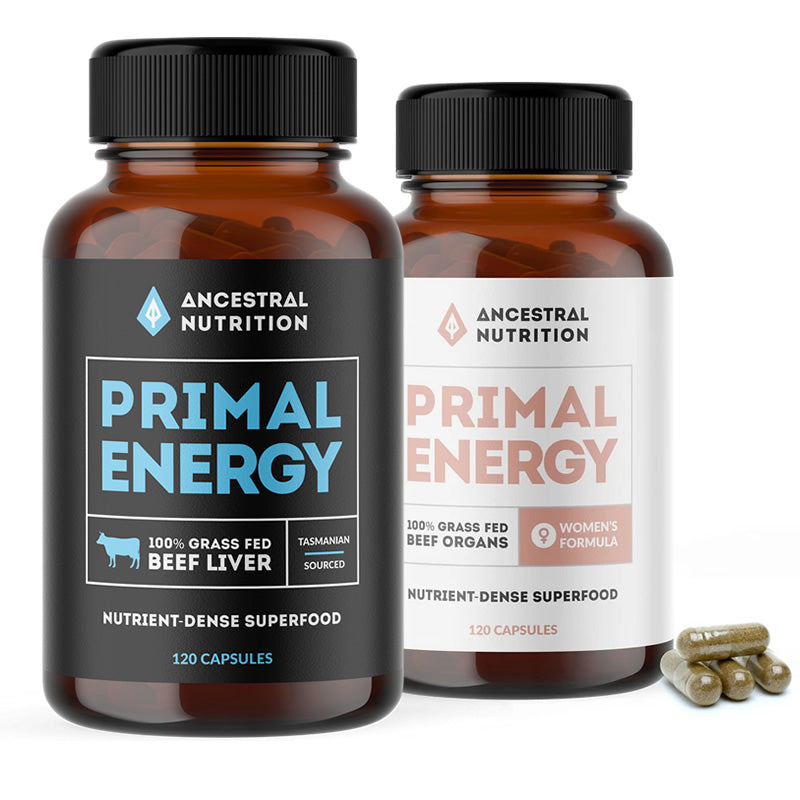
At Ancestral Nutrition, we focus on nutrient-dense, whole-food organ supplements sourced from grass-fed animals, delivering naturally occurring vitamins, minerals and cofactors in the forms found in nature.
No synthetic shortcuts, no isolated megadoses and no hype.
Just foundational nutrition designed to support the systems your body already relies on, including digestion. Before chasing the next gut trend, consider strengthening the base.
Explore the range of beef organ supplements at Ancestral Nutrition and build health from the inside out, the way it was always meant to be.