The Problem With ‘Food-Like’ Health Products
article by Ancestral Nutrition
Modern wellness has become very good at imitation. Not imitation in the obvious sense, not junk food pretending to be healthy. Something subtler...
A growing category of products now sits in the middle ground between food and supplements. They look nourishing, they sound functional and they borrow the language of real food, but they’re not quite food.
- Greens powders
- Protein bars
- Vitamin gummies
- Electrolyte sachets
- Fortified snacks
- “Superfood” blends
These are what we might call food-like health products, products designed to feel like nutrition, without necessarily delivering the same biological experience as whole foods, and that distinction matters.
They’re Built for Convenience, Not Complexity
The appeal is obvious, a scoop instead of a salad, a gummy instead of a meal, and a bar instead of breakfast. These products promise to save time, fill gaps, and simplify health. And to be fair, some of them can be useful in the right context. But they’re often built around one core principle:
Convenience first
That means they need to be:
- Shelf stable
- Easy to flavour
- Easy to market
- Easy to consume
And once convenience becomes the priority, nutritional complexity usually takes a back seat. Real food is messy, it spoils, it requires prep and it doesn’t fit neatly into sachets and branding decks. That inconvenience is often part of what makes it real.
The Illusion of Equivalence
One of the biggest problems with 'food-like health products' is the suggestion that they’re “just as good” as the foods they’re replacing.
A greens powder is framed like vegetables, a protein bar is framed like a meal and a multivitamin gummy is framed like nourishment. But equivalence on a label doesn’t always translate to equivalence in the body.
Take vegetables... a powdered blend of dried greens may contain plant-derived compounds, but it doesn’t replicate:
- The water content
- The fibre structure
- The chewing and digestive response
- The food volume and satiety
- The full nutrient complexity of fresh produce
It may contain elements of vegetables but that doesn’t make it vegetables.
The same goes for fortified bars and “functional snacks.” A handful of added vitamins doesn’t transform a processed product into a nutrient-dense meal. It simply transforms the label.
Fortification Isn’t the Same as Nourishment
This is where many food-like health products lean heavily: fortification.
- Add vitamin C
- Add magnesium
- Add B12
- Add probiotics
- Add collagen
Suddenly, a product looks nutritionally impressive, but fortification is often just a patch. It takes a nutritionally incomplete base and adds selected compounds back in, usually the ones that are easy to market, cheap to source, or trending on social media. That doesn’t recreate the architecture of whole food.
Whole foods deliver nutrients in context:
- Bound within proteins and fats
- Accompanied by cofactors
- Presented in naturally occurring ratios
- Digested through complex physical and biochemical processes
A bar with “added zinc” isn’t the same as a zinc-containing food and a gummy with “vitamin A” isn’t the same as liver. And the body knows the difference.
The Psychological Trap
Perhaps the biggest issue with food-like health products is not nutritional, it’s behavioural. They create the feeling of having done the healthy thing.
- You had your greens
- You took your probiotic
- You ate your high-protein bar
And that can become a substitute for asking the more important question:
What does my diet actually look like?
Food-like products often sit on top of weak foundations.
They’re used to compensate for:
- Poor meal quality
- Low nutrient density
- Skipped meals
- Processed diets
- Inconsistent eating habits
That doesn’t mean they’re useless, but they can become nutritional theatre, health signals rather than health substance.
Whole Foods Still Do More
Real food does things processed wellness products struggle to replicate.
It delivers:
- Texture
- Satiety
- Structure
- Digestive stimulation
- Naturally occurring nutrient ratios
- Greater food-level complexity
And often, it does this without needing a claim on the front of the packet. No one needs to call liver “high-performance ancestral vitality support.” It just is what it is.
The same applies to eggs, red meat, fruit, vegetables, dairy, seafood and other minimally processed foods. Their power lies not in novelty, but in biological familiarity. The body recognises them and that matters.
This Isn’t About Perfection
Not every product in a sachet is bad and not every convenience item is useless. The issue is when they begin to replace the foods they were never designed to outperform.
A greens powder can supplement a good diet, but it can’t become one. A protein bar can be practical, it shouldn’t become nutritional insurance. A gummy can be convenient but it doesn’t make up for dietary emptiness.
The Bigger Question
Modern wellness has become obsessed with optimisation, but in many cases, we’re not optimising nutrition, we’re outsourcing it.
We’re trying to compress nourishment into things that are easier to sell, easier to carry, and easier to consume, but often less complete. That doesn’t mean every food-like product is harmful. It means we should stop confusing convenience with nourishment.
Because once you do, it becomes very easy to build a “healthy” lifestyle around products that only resemble the thing they’re replacing, and resemblance is not the same as reality.
A Return to Real Nutrition
At Ancestral Nutrition, we believe the foundation of health still comes back to real food.
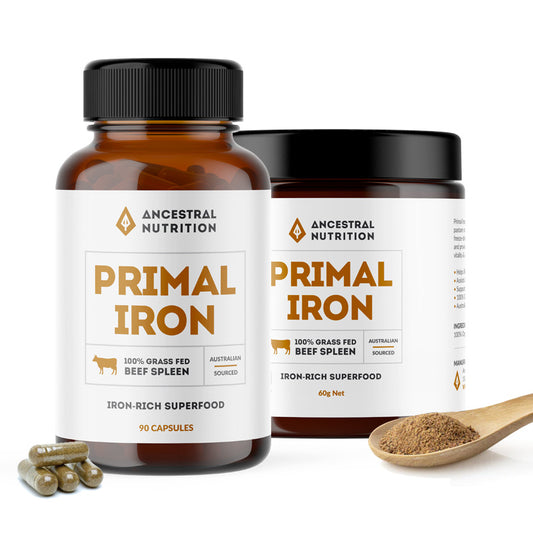
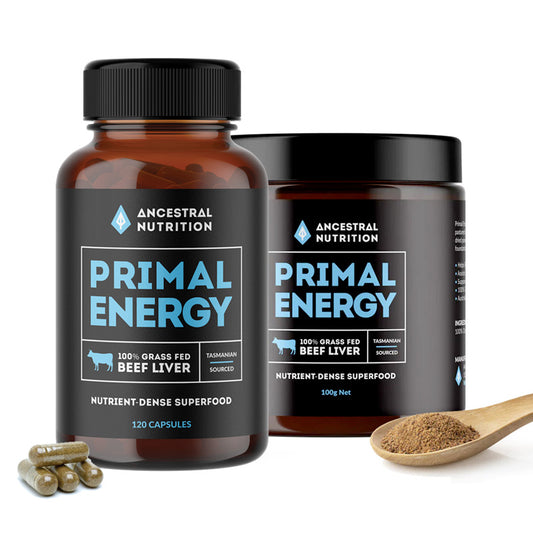
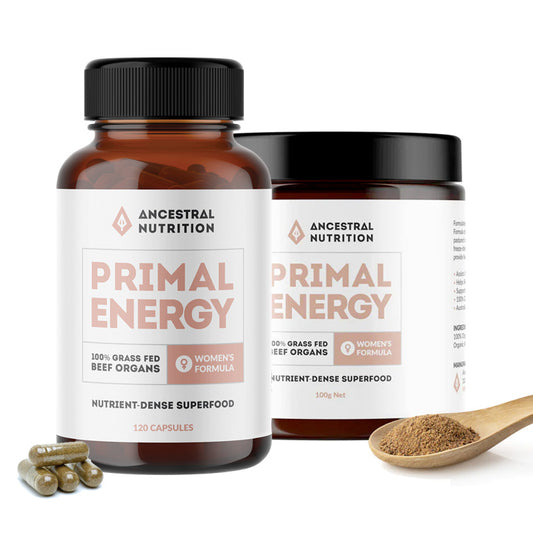
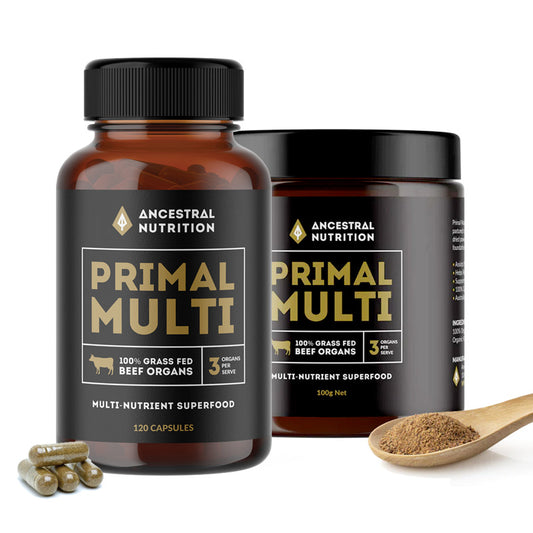
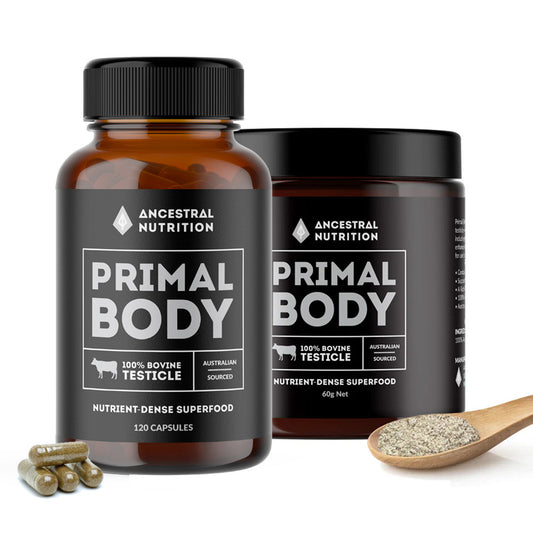
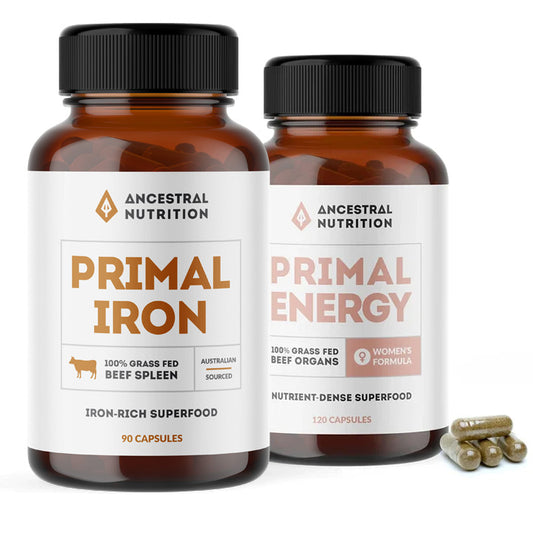
That’s why our freeze-dried organ supplements are made from whole-food, grass-fed beef organs, not synthetic blends, isolates, or food imitations. No flavour masking, no fillers. Just nutrient-dense food in a convenient format.
If you’re tired of products that look healthy but leave something missing, explore the range of beef organ supplements at Ancestral Nutrition and return to nourishment that’s grounded in what the body actually recognises: real food.
*This information is for educational purposes only and is not intended to diagnose, treat, or cure any medical condition. Please consult your healthcare provider for personalised guidance, particularly if you have a diagnosed deficiency or are considering changing your supplement regimen.