Fight Tiredness Now!

-
100% RDI Heme Iron
Beef spleen offers a natural, rich and easily absorbed source of heme iron, helping you stay on top of your day.
-
A Natural Source of Iron
Naturally sourced from whole food—ideal for those seeking a gentle, food-based source of iron.
-
Naturally bioavailable
Heme iron is more readily absorbed than plant-based and non-heme iron sources.
The World's Purest Beef Organs
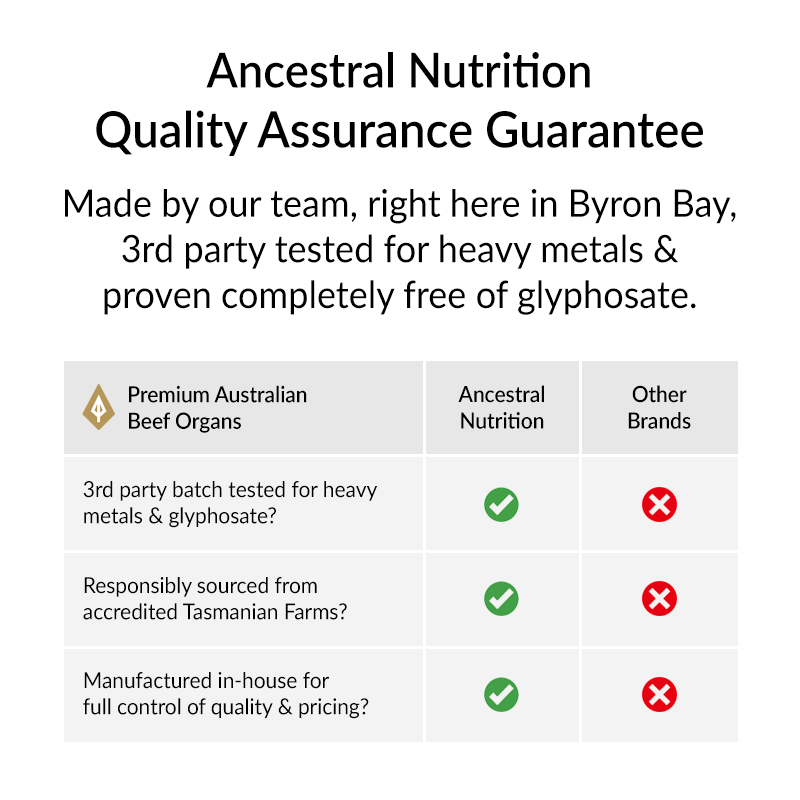
We set a new benchmark by independently lab-testing for heavy metals and guaranteeing it is 100% free of glyphosate. We test because we want to know with absolute certainty that our purity is flawless, a guarantee you simply won't get from other brands - even the certified organic labels.
Nature’s Iron-Rich Superfood
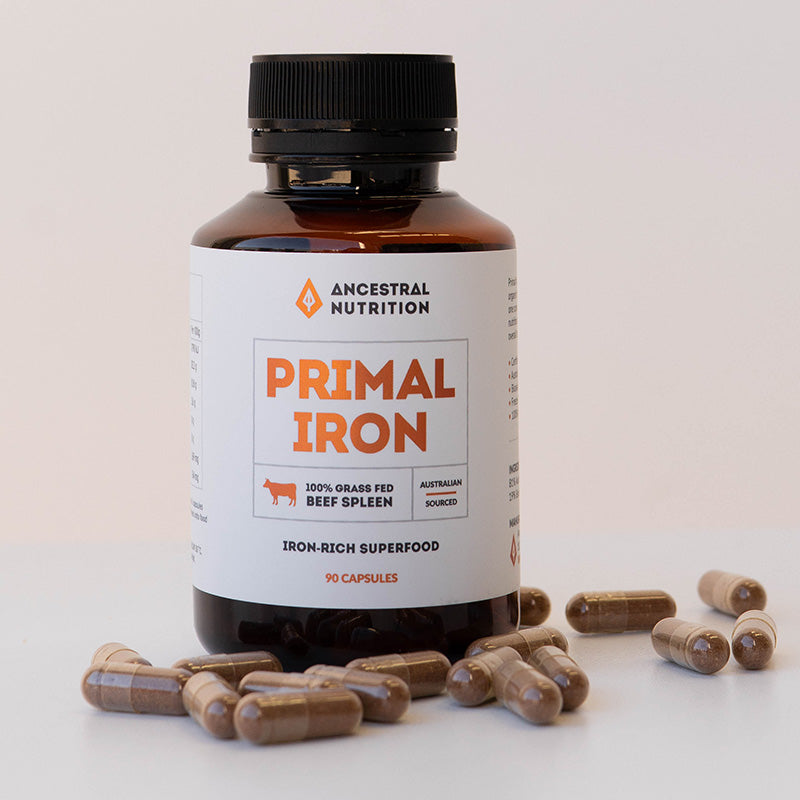
Each serve of beef spleen provides a unique mix of highly bioavailable nutrients, including substantial amounts of naturally occurring vitamin B12 and heme iron, all found in their wholefood form. Traditionally valued for its role in supporting daily vitality, beef spleen is a natural, rich source of easily absorbed iron.
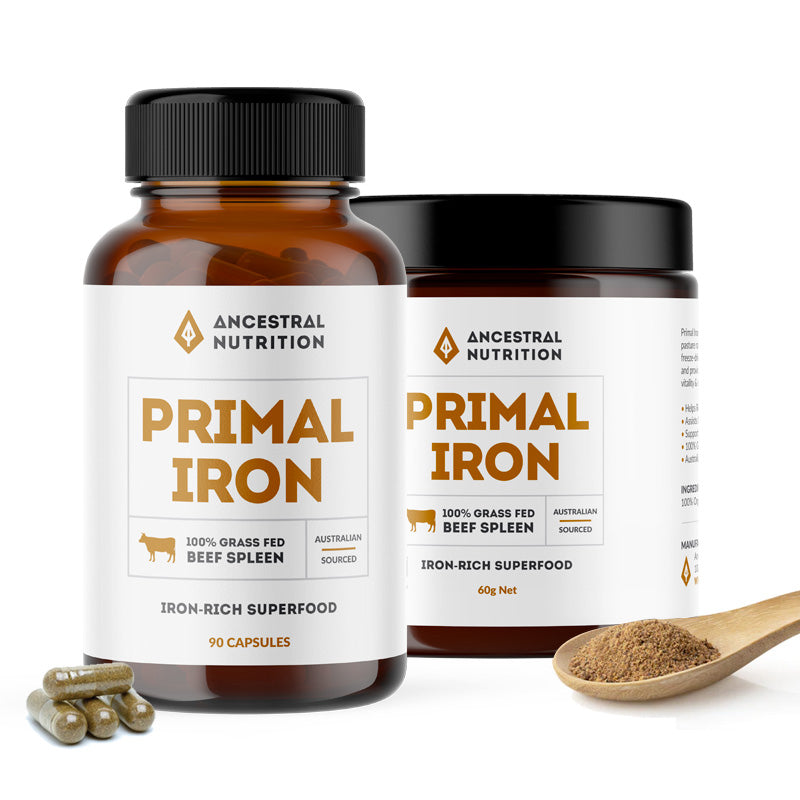
100% RDI Iron per 3g Serve
Iron Benefits (Naturally found in beef spleen):
- Helps your body feel less tired by supporting natural energy production
- Supports the healthy creation of red blood cells, which carry oxygen throughout your body
- Plays a role in keeping your immune system working as it should
Grown in Tasmania. Crafted in Byron Bay.
We use certified grass-fed and grass-finished beef spleen from Tasmanian farmers. It's freeze-dried in small batches and packed in our Byron Bay facility to retain its natural nutrient profile.
Third-party batch tested for quality.
Primal Iron Beef Spleen Capsules & Powder FAQs
What Nutrients Are Naturally Found in Beef Spleen Supplements?
Beef spleen is a traditional wholefood valued for its unique nutrient profile, particularly its naturally occurring heme iron and vitamin B12. When freeze-dried, it retains its full spectrum of nutrients in a form the body can readily absorb — with no synthetic additives or fillers.
Key Nutrients Naturally Found in Beef Spleen:
- Heme Iron – supports normal oxygen transport and contributes to energy production
- Vitamin B12 – essential for red blood cell formation and healthy nervous system function
- Zinc & Copper – involved in immune health and antioxidant activity
- Selenium – supports normal thyroid function and cellular defence
- Small amounts of Vitamin C – naturally present in raw spleen
- Peptides and enzymes – including splenin, which are naturally occurring in this organ
Our beef spleen comes from 100% grass-fed, grass-finished Tasmanian cattle and is freeze-dried in small batches for maximum purity and potency.
How Do Beef Spleen Supplements Taste?
Beef spleen supplements are available in both capsule and powder form — and the taste experience can vary depending on which you choose.
- Capsules: Most people find beef spleen capsules virtually tasteless. They’re an easy and convenient way to get the benefits of organ meats without the flavour. Simply swallow with water, just like any other supplement.
- Powder: Freeze-dried beef spleen powder has a rich, earthy flavour that’s true to its natural source. While some people enjoy the taste in savoury blends, others prefer to mix it into smoothies, broths, or sauces to mask the flavour.
Whether you choose capsules or powder, beef spleen is valued more for its nutrient density than its taste.Tip: If you're sensitive to taste, capsules are the most neutral option.
When Is the Best Time to Take Beef Spleen Supplements?
Beef spleen supplements can be taken at any time of day, but many people prefer to take them in the morning or with their first meal to support daily nutrient intake and energy metabolism.
Because beef spleen is naturally rich in vitamin B12, iron, and other energising nutrients, taking it earlier in the day may help align with your body’s natural rhythm and avoid any potential for overstimulation at night.
Tips for Best Results:
- With food: Taking beef spleen with/after a meal may help improve absorption.
- Consistency matters: Regular daily use is more important than timing — choose a time that fits your routine.
- Start slow: If you're new to beef organs, begin with a smaller dose and gradually increase as tolerated.
Beef spleen supplements are a wholefood source of nutrients, not synthetic isolates — making them suitable for long-term daily support.
How Long Does It Take to Notice the Effects of Beef Spleen Supplements?
The timeline for noticing the benefits of beef spleen supplements can vary from person to person. It often depends on your current iron and B12 status, dietary habits, and overall lifestyle.
Because beef spleen is a natural source of heme iron, vitamin B12, and supportive trace minerals like zinc and copper, some individuals may feel a shift in energy, stamina, or general wellbeing within a few weeks. For others, it may take longer as the body gradually rebuilds nutrient stores.
Factors That May Influence Your Experience:
- Nutrient status: If you're not getting enough iron or B12 from food, you may notice changes sooner.
- Consistency: Whether you use capsules or powder, taking your supplement daily is key.
- Overall diet: Pairing beef spleen with a nutrient-dense, wholefood diet may support better outcomes.
As with any wholefood supplement, beef spleen works best when taken consistently over time as part of a balanced approach to wellbeing — not as a quick fix.
Are Your Beef Spleen Products Free From Bovaer® Feed Additives?
Yes — our beef liver products are sourced from 100% grass-fed and grass-finished, pasture-raised Tasmanian cattle that are not supplemented with Bovaer® or other synthetic feed additives.
We work closely with local farms that focus on natural, traditional grazing practices. This ensures the purity of our products while maintaining full transparency across the supply chain — from paddock to capsule.
No hormones, no antibiotics, no synthetic feed additives — just real food the way nature intended.
Are Your Products Certified Organic?
While we source our organs exclusively from pristine, pasture-raised cattle in Tasmania, we do not rely on "certified organic" labels. Here is why:
Organic certification is a promise about how the farm is managed, but it does not guarantee that the final capsule is actually free from environmental contaminants. We prefer proof over promises.
Instead of paying for an organic logo, we invest in rigorous, independent lab testing. We screen our finished products using state-of-the-art ICP-MS technology to test for 32 heavy metals (like Lead and Mercury) and agricultural chemicals (like Glyphosate) to guarantee absolute purity.
You never have to take our word for it, you can view our unedited, zero-glyphosate lab results right here.
Is Beef Spleen a Good Source of Iron?
Yes — beef spleen is one of the richest natural sources of heme iron, the form most easily absorbed and used by the human body. A small daily serve provides meaningful amounts of iron to support your dietary intake through real, nutrient-dense food.
Iron contributes to:
- Normal energy production and reduction of tiredness and fatigue
- Healthy oxygen transport via red blood cells
- The formation of haemoglobin
- Normal immune system function
Because it comes in its heme form, the iron in beef spleen is significantly more bioavailable than the non-heme iron found in many plant-based foods.
Our beef spleen is sourced from 100% grass-fed, grass-finished Australian cattle and gently freeze-dried to preserve its naturally occurring nutrients — with no additives or fillers.
Can I Use Beef Spleen Supplements While Pregnant?
Beef spleen is a natural source of important nutrients like heme iron, vitamin B12, zinc, and selenium — all of which play supportive roles during pregnancy. These nutrients are present in their wholefood form, making beef spleen a valuable addition to a nutrient-dense diet for some women.
Unlike beef liver, beef spleen contains no vitamin A, making it an appealing alternative for those mindful of retinol intake during pregnancy.
In Australia, the Recommended Dietary Intake (RDI) for iron during pregnancy is 22–27 mg per day, and for vitamin B12 it is 2.6 µg per day. A standard 3-capsule serve of freeze-dried beef spleen delivers approximately 11.5 mg of ironand a meaningful amount of vitamin B12, helping support these needs through real food.
As always, we recommend consulting your healthcare provider before adding beef spleen supplements to your routine during pregnancy, to ensure they align with your individual dietary needs and prenatal care plan.
Wholefood organ supplements like beef spleen can offer nutritional value — but every pregnancy is different, and personalised advice is best.
How Are Your Beef Spleen Supplements Made?
Our beef spleen supplements are made using a careful, low-temperature freeze-drying process that preserves the natural integrity of the nutrients — without the use of heat, additives, or synthetic preservatives.
Here’s how we do it:
Step-by-Step Production Process:
- 1. Sourced Locally: We use 100% grass-fed & grass-finished, pasture-raised beef spleen from Tasmanian farms that meet strict animal welfare and food safety standards.
- 2. Fresh Processing: The spleen is trimmed, gently cleaned, and frozen shortly after harvest to maintain freshness and nutrient quality.
- 3. Freeze-Dried for Potency: Through sublimation, moisture is removed at low temperatures to preserve heat-sensitive vitamins like B12 and folate.
- 4. Milled and Encapsulated (or Powdered): The dried spleen is finely ground and packed into capsules or jars — with no binders, fillers, or flow agents.
- 5. Packed in Our Byron Bay Facility: We manufacture in-house to maintain full control over quality and consistency, from raw ingredient to finished product.
Every batch is third-party tested for safety and packaged in our purpose-built Byron Bay facility — ensuring transparency, traceability, and trust.
What’s the Difference Between Beef Spleen Capsules and Powder?
Both capsules and powder deliver the same core benefits of beef spleen — but differ in format, convenience, and flexibility, depending on your lifestyle and preferences.
Beef Spleen Capsules:
- Pre-measured and easy to take
- No taste or smell — ideal if you’re sensitive to flavour
- Great for travel or daily routines
- Offers consistent dosage (e.g. 1.8g = 3 capsules)
Beef Spleen Powder:
- Versatile for adding to food (e.g. smoothies, bone broth, patties)
- Slightly more economical per gram
- Mild organ flavour — best for those who are comfortable with natural tastes
- Allows flexible dosing for families or pets
Whether you prefer convenience or culinary creativity, both formats provide the same freeze-dried, nutrient-dense spleen — sourced from grass-fed & grass-finished Australian cattle and made without additives or fillers.
Primal Iron Additional Information
Everything You Need to Know About Beef Spleen
In the realm of alternative nutrition, there's a hidden gem that's often overlooked: the beef spleen. Yes, this organ meat might not be the star of the show, but its nutritional profile packs a punch that might just make you reconsider your dietary choices. Let's dive into the world of beef spleen, exploring its wonders and understanding why it's a great natural alternative to synthetic iron supplements.
What Exactly is Beef Spleen?
The spleen is an organ that sits quietly in the abdomen of animals, including cows. While it might not sound like the most appealing dish, its nutrient profile is nothing short of impressive. Packed with natural vitamins and minerals, the beef spleen is a nutritional powerhouse that has been a part of traditional diets across various cultures for centuries.
Beef Spleen: Nature's Iron Support
Now, let's talk iron. Falling short of daily iron requirements is a common concern, especially for individuals with specific dietary restrictions. Here's where beef spleen steps in as a natural dietary support. Beef spleen offers the highest concentration of iron from any organ, with a single 3g serving of our freeze-dried beef spleen offering almost 100% of your daily iron RDI!
The bioavailability of iron in beef spleen, particularly heme iron (a type of iron found in animal-derived foods), is specifically advantageous compared to plant-based or synthetic sources due to several factors:
- Chemical Structure: Heme iron, predominant in animal-derived products like beef spleen, has a structure similar to the iron in our blood (hemoglobin). This resemblance allows the body to absorb heme iron more efficiently as it closely mirrors the form of iron our bodies are naturally designed to use.
- Enhanced Absorption: Heme iron, unlike non-heme iron found in plants or synthetic supplements, is absorbed through a distinct and more efficient pathway in the intestines. The body's mechanisms for absorbing heme iron are highly effective. The absorption rate of heme iron is typically around 15-35%, while non-heme iron absorption is generally lower, ranging from 2-20%.
- Absorption Enhancers: The presence of specific compounds in animal-based wholefoods can enhance the absorption of heme iron. For instance, meat contains factors that counteract inhibitors of iron absorption present in various foods, further supporting the body's ability to take in and utilise iron.
- Reduced Interference: Non-heme iron from plant sources can be influenced by other dietary components, such as anti-nutrients like phytates and polyphenols, which can hinder its absorption. Heme iron, on the other hand, is much less affected by these inhibitors.
The Hidden Costs of Convenience
While synthetic supplements offer a quick fix, they can sometimes come with hidden costs in the form of digestive discomfort. Synthetic supplements often provide an excessive dose of isolated nutrients, which can disrupt the body's natural balance. Moreover, they lack the holistic nutritional spectrum found in wholefoods like beef spleen.
Health Benefits Beyond Iron
Beef spleen isn't just about iron. It's a wholefood powerhouse offering a spectrum of essential nutrients. A standout is its rich concentration of Vitamin B12, an essential nutrient that supports normal nerve function, red blood cell formation, and natural energy production, ensuring your body gets holistic support in every serving.
The Gut Connection
Interestingly, beef spleen also contains naturally occurring peptides. In traditional ancestral nutrition, these organ-specific compounds are highly valued for supporting overall wellness and maintaining a healthy, normal digestive system.
How to Supplement with Freeze-Dried Beef Spleen
If you are looking for a natural, wholefood, and highly bioavailable supplement to support your daily iron intake alongside a myriad of critical nutrients, look no further than desiccated beef spleen.
Our Primal Iron Beef Spleen supplements are 100% hormone, antibiotic, and GMO-free. Available in capsules or powder form, they provide nose-to-tail nourishment, are freeze-dried to gently preserve nutrients, and are sourced from 100% grass-fed and grass-finished cattle grazing on pristine Tasmanian pastures.
Is Iron From Plants or Meat Better?
Who remembers Popeye, the wisecracking cartoon sailor who possessed superhuman strength after ingesting an always-handy can of spinach? While spinach may not provide bulging muscles or super-strength, it does provide iron, which is an important nutrient for stable daily energy. When our diets lack this precious mineral, it can lead to feelings of weakness, tiredness, and fatigue—but we may not need to carry cans of spinach around like Popeye to fix it.
In this article, we’ll look at the role iron has to play in the body, and examine the different types of iron.
Why is iron important? Iron is an essential nutrient that plays a vital role in the transport of oxygen around the body. It binds to something called hemoglobin (a special protein) and helps it carry red blood cells from your lungs to other tissues in your body. When we don't get enough daily iron, our bodies can struggle to maintain optimal oxygen levels, which can impact a large percentage of women and men. The easiest way to support your body is to consume more foods rich in this essential mineral.
How much iron do we need? The recommended daily intake (RDI) may vary based on a person’s gender and life stage but is typically:
- Men over 19 years - 8 milligrams
- Women between 19 and 50 years - 18 milligrams
- Women over 51 years - 8 milligrams
- Pregnant women - 27 milligrams
- Women who are exclusively breastfeeding - 10 milligrams
The different types of iron There are two forms of iron: heme iron and non-heme iron. The term 'heme' is derived from a Greek word that loosely translates to 'blood.' This type of iron comes from animal protein, such as poultry, fish, and beef. Non-heme iron is found in plant foods including legumes, leafy greens, and nuts.
Which type of iron is better? Your body can absorb heme iron (from animal protein) more readily, and it is reported to be up to 18% more bioavailable. Non-heme iron, the iron source in vegetarian diets, has a bioavailability of 5–12%. The reason for this is that many plant foods that contain iron also contain phytic acid and oxalates, which can significantly inhibit the body's ability to absorb iron.
Iron-rich foods Good sources of heme iron offering around 3.5mg per serve include:
- Beef organs
- Mussels
- Oysters
While sources of non-heme iron offering around 3.5mg per serve include:
- Tofu & Soybeans
- Lentils
- Beans (red, white, kidney, etc.)
Organ meats and iron As outlined above, organ meats are a wholefood source of iron, with the spleen offering the highest concentration of all. Beef liver also offers a wide range of iron and B-vitamins, and is especially high in vitamin A. It's important to note that falling short of your daily vitamin A needs may interfere with your ability to efficiently absorb iron, which can increase your overall iron requirements.
What Are The Best Iron Rich Foods?
Foods To Support Your Iron Levels > Eating a balanced and nutritious diet is the key to remaining healthy and supporting your overall wellbeing. To maintain a balanced diet, we have to include macronutrients and micronutrients.
Macronutrients are the main food groups that the body needs in large quantities, like proteins, fats, and carbohydrates. On the other hand, micronutrients are nutrients that the body needs in smaller amounts, like minerals and vitamins. Among the most important minerals is iron.
Iron is essential to ensure the proper functioning of hemoglobin. That is a protein your body needs to transport oxygen to all body parts through the blood.
The recommended daily intake (RDI) depends on our age and sex. Experts recommend the following intake levels:
- Men over 19 years - 8 milligrams
- Women between 19 and 50 years - 18 milligrams
- Women over 51 years - 8 milligrams
- Pregnant women - 27 milligrams
- Women who are exclusively breastfeeding - 10 milligrams
There are certain groups of people who often have higher iron requirements, including:
- Pregnant women, who need it in more volume to support maternal health and fetal development.
- Young children and adolescent girls, who need more of the mineral to support rapid growth and to account for menstruation.
- Frequent blood donors.
What Happens When We Don't Get Enough? If our bodies do not absorb the required amounts of this mineral, we can fall short of our daily needs. When we don't get enough iron, our bodies struggle to produce enough healthy red blood cells to carry oxygen effectively. Some of the common signs that you might be falling short include:
- Constant tiredness and fatigue
- General weakness
- Pale skin
- Poor concentration
There are different reasons why we might struggle to maintain healthy iron levels, including:
- Blood loss
- Lack of the mineral in our diet
- Increased physiological needs (like pregnancy)
- The inability of the body to absorb it efficiently
Iron-Rich Foods To support the levels of this mineral in our bodies, we need to eat foods that provide it in higher amounts. We can consume it as either heme or non-heme iron. We get heme iron from animal foods like red meat, poultry, and fish, while we get non-heme iron from plant-based foods.
Our bodies absorb heme iron much more efficiently. Some of the best iron-rich foods we should always include in our diets to support energy and reduce fatigue include:
Beef Spleen & Organs > Meat from beef organs is incredibly nutritious and packed with minerals. Some of the best organs include the spleen, kidney, heart, and liver. The iron from these beef organs is highly bioavailable, meaning it is more easily absorbed by our bodies than the iron we get from plants.
Beef spleen is the organ with the highest concentration of iron, with a 2g serving of freeze-dried spleen containing roughly 11.5 milligrams. That represents almost 100% of the standard daily value.
Red Meat Eating red meat not only supports our protein intake but also provides a great source of this blood-supporting mineral. A serving of 3.5 ounces of red meat provides us with about 2.7 milligrams of iron.
Shellfish > Shellfish are highly nutritious. While most have good amounts of iron, oysters, clams, and mussels are the ones with the highest concentrations. A 3.5-ounce serving of clams, for example, has up to 3 milligrams.
Fish & Poultry There are a lot of different types of fish we can eat to support our iron intake. A serving of 3 ounces of tuna has about 1.4 milligrams of the mineral. Turkey, especially dark turkey meat, is also a good source.
Iron-Rich Plant-Based Foods Non-heme iron can be found in the following plant-based foods:
- Spinach
- Legumes
- Pumpkin seeds
- Quinoa
- Broccoli
- Tofu
- Dark chocolate
The Vitamin C Connection Low iron levels do not only happen because we aren't eating enough of it; it can also happen if our bodies are unable to absorb it effectively. To help maximize non-heme iron absorption, we should try to include foods rich in Vitamin C alongside our meals. Some great sources of Vitamin C include:
- Broccoli
- Kiwi
- Oranges & Grapefruit
- Strawberries
- Tomatoes
- Leafy greens
As outlined above, beef organs are an excellent source of highly bioavailable heme iron but can be difficult to source and prepare, which is why high-quality, freeze-dried organ supplements have become so popular.
Disclaimer
The information presented on this page is provided for general educational purposes only and is not intended to diagnose, treat, cure, or prevent any disease. Statements about Primal Iron — Grass-Fed Beef Spleen and other Ancestral Nutrition products have not been evaluated by the Therapeutic Goods Administration (TGA). These products are sold as foods/dietary supplements and are regulated under the Australia New Zealand Food Standards Code; they are notregistered therapeutic goods.
Individual nutrient requirements vary. Always read the label, follow directions for use, and check the Nutrition Information Panel for serving size and daily intake guidance. If you are pregnant, nursing, under 18 years of age, have a known medical condition, or are taking prescription medication, consult a qualified healthcare professional before using any new food or supplement.
Testimonials and customer stories reflect personal experiences and may not be typical; results can differ from person to person. Ancestral Nutrition makes no guarantee of specific outcomes.
By continuing to browse or purchase from this site, you acknowledge that you have read and understood this disclaimer and agree to use the information and products responsibly and in conjunction with professional medical advice where appropriate.