5 Health Trends Quietly Rewriting 2026
article by Ancestral Nutrition
The Health Shifts Setting the Tone for 2026
In our first newsletter of 2026 we thought we'd outline the areas of health that made the most noise in 2025.
The following five trends didn’t explode because they were flashy. They escalated because they worked, subtly, consistently, and in ways people could feel. These are the shifts that gained real momentum in 2025 and are worthy of consideration this year.
1. Creatine moved from the gym to the brain
Creatine’s reputation changed dramatically in 2025.
What was once viewed almost exclusively as a performance supplement became widely discussed for its role in cognitive resilience, mental energy, stress tolerance, and sleep-deprived performance. Parents, executives, students, and older adults (many of whom had never stepped into a gym) began experimenting with low-dose creatine for mental clarity and stamina.
The likes of Andrew Huberman, Dr Rhonda Patrick and many others began talking about larger doses (up to 20g per day) having very beneficial effects on brain health. Creatine stopped being framed as a muscle-builder and started being understood as a cellular energy buffer, particularly for tissues with high energy demand, like the brain.
As we head into 2026, creatine is no longer niche. It’s becoming foundational and is on our non-negotiable list of daily supplements.
2. Food-based nutrients replaced megadose supplement stacks
This was one of the most telling shifts of 2025.
After years of increasingly complex supplement protocols, many people reached a breaking point. More capsules didn’t mean better health and in many cases, symptoms like feelings of overwhelm, poor sleep, digestive upset, and nutrient imbalances worsened.
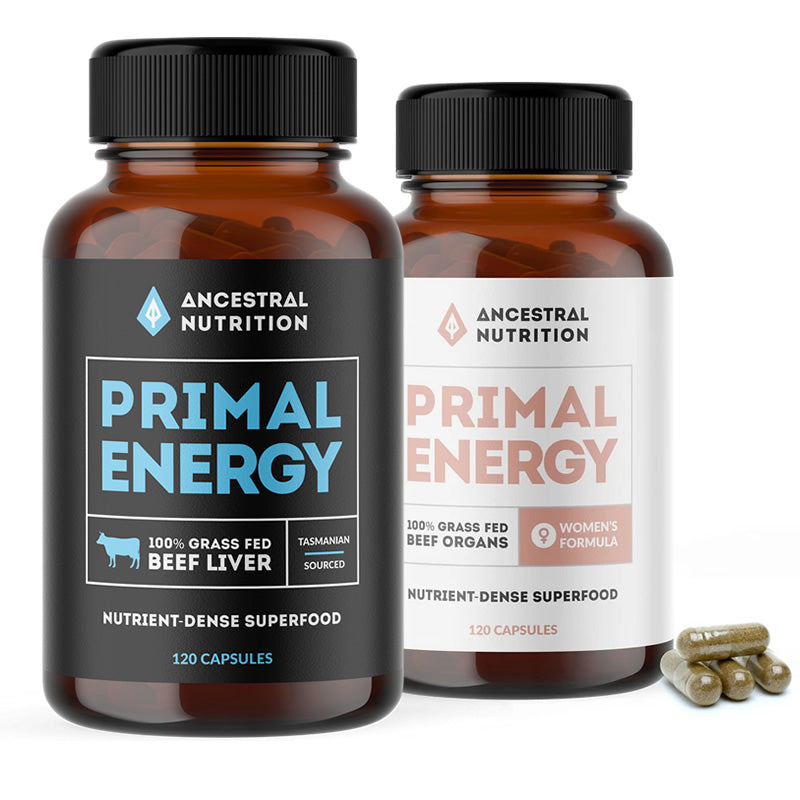
The response was a return to food-form nutrition: organs, collagen-rich foods and supplements, mineral-dense animal products, and whole-food concentrates. Instead of chasing isolated nutrients, people began prioritising nutrient dense foods and supplements that the body can recognise and use more efficiently.
This trend wasn’t about rejecting supplements entirely. It was about choosing forms that felt stabilising rather than stimulating. As we move into 2026 it's less about miracle greens powders and more about nourishing whole food solutions.
3. Electrolytes replaced “hydration”
One of the quiet but meaningful shifts of 2025 was the reframing of hydration itself.
For years, people were told to drink more water, often without any discussion of what that water was displacing. The result? Frequent urination, lingering thirst, headaches, fatigue, and a sense of being “hydrated but flat.”
In 2025, the conversation matured. People began recognising that hydration isn’t just about fluid, it’s about electrolyte balance. Sodium, potassium, and chloride play a central role in nerve signalling, muscle contraction, blood volume, and energy regulation. Without them, water doesn’t hydrate well, it dilutes!
The solution didn’t need to be complicated, just salty.
While electrolyte powders surged in popularity, many people discovered that something far simpler worked just as well: adding quality salt to water. A pinch of sea salt or mineral salt, especially first thing in the morning or around exercise helped water stay where it was needed, improved thirst signalling, and reduced the constant cycle of drinking and urinating.
4. Zone 2 cardio overtook HIIT
In 2025, something unexpected happened in the fitness world: people stopped chasing intensity and started chasing consistency.
High-intensity interval training didn’t disappear, but it lost its position as the default. Instead, Zone 2 cardio, steady, conversational-pace movement became the backbone of many training routines. Walking, cycling, swimming, and light rowing took centre stage, not because they looked impressive, but because they worked.
Zone 2 proved sustainable. It supported mitochondrial efficiency, improved fat metabolism, and enhanced cardiovascular capacity without exhausting the nervous system. For people already juggling work stress, poor sleep, or heavy training loads, this mattered.
Perhaps most importantly, people noticed how they felt. Fewer energy crashes. Better recovery. More motivation to train again the next day.
By the end of 2025, the message was clear: intensity has a place, but health is built in the quiet miles.
5. Cold exposure shifted from toughness to nervous system training
Cold exposure didn’t disappear, it matured.
In earlier years, ice baths were framed as a test of willpower. In 2025, the emphasis shifted toward regulation. Shorter exposures, better breathing, and intentional exit strategies replaced endurance contests.
People began using cold as a way to train stress recovery rather than stack stress on top of stress. This made it more accessible especially for those already dealing with high mental or emotional load.
As we move into 2026, the future of health looks less like doing more, and more like doing what the body has been quietly asking for all along.