The Dirty Secret of ‘One-A-Day’ Nutrition
article by Ancestral Nutrition
The pharmacy or supermarket supplement aisles will be packed with the following phrases:
- One capsule
- Once a day
- Complete
It’s simple, convenient and reassuring. But here’s the uncomfortable truth: Human biology doesn’t work in shortcuts.
The Illusion of “Complete”
A one-a-day multivitamin suggests you can cover all nutritional bases in a single swallow. But nutrients don’t function in isolation. They operate in networks, cofactors, enzymes, transport pathways and balance.
Compress that complexity into one synthetic tablet and something changes. Often, what’s lost is context.
Synthetic ≠ Identical
On a label, “Vitamin A” looks like vitamin A, “Folate” looks like folate, but the form matters.
Folic acid, for example, is a synthetic compound. It requires conversion before the body can use it effectively, and that conversion isn’t equally efficient for everyone. In those who convert it poorly, folic acid can build up and limit the body’s ability to support healthy red blood cell formation and normal DNA synthesis. Naturally occurring folate in whole foods exists in metabolically active forms and comes packaged with supportive nutrients.
The same applies elsewhere:
- Synthetic vitamin E vs the full family of naturally occurring tocopherols and tocotrienols
- Isolated beta-carotene vs preformed vitamin A compounds
- Cheap mineral oxides vs food-bound trace minerals
On paper, they look equivalent, in the body, they’re not experienced the same way.
The Bioavailability Question
Labels focus on milligrams and percentages of RDI but they rarely mention absorption.
Some synthetic forms are poorly utilised. Others compete for the same transport pathways. High doses of certain nutrients can unintentionally disrupt the balance of others. Nutrition isn’t just about how much you take, it’s about how much your body can actually use.
100% RDI: Comforting, But Limited
Seeing “100%” next to a nutrient feels complete.
But RDIs were created to prevent deficiency, not to optimise vitality or resilience. They also assume nutrients are consumed within food matrices, not as isolated powders delivered all at once.
Eating a whole orange is not the same as swallowing an ascorbic acid tablet.
- One is a symphony of compounds working together
- The other is a single isolated note
The Balance Problem
Whole foods deliver nutrients in naturally occurring ratios.
Liver doesn’t just contain vitamin A, it also provides copper, iron, B12 and supporting cofactors in proportion. Muscle meat carries zinc, selenium and other trace elements as part of a broader nutritional ecosystem.
Most multivitamins, on the other hand, are formulated around cost, stability and shelf life. Some nutrients are included in higher amounts because they’re inexpensive. Others appear in token quantities for label appeal. It’s formulation by spreadsheet, not by nature.
Convenience Came With a Compromise
The idea of nutritional “insurance” is appealing. Eat reasonably well, take a tablet, move on. But no synthetic capsule replaces food quality.
True nourishment begins with nutrient-dense foods grown in healthy soil, raised responsibly, and consumed in their natural context. For most of human history, we didn’t rely on isolated nutrients. We ate nose-to-tail, valuing the whole animal because they offered many nutrients in forms the body recognised and readily used.
The Real Question
If a once-daily synthetic tablet truly delivered what it promised, would so many people still feel like something is missing? The dirty secret of one-a-day nutrition isn’t that it’s dangerous, it’s that it’s incomplete.
- Real nourishment isn’t about ticking boxes
- It’s about density, balance & bioavailability
And those rarely come from a factory.
A Food-First Alternative
At Ancestral Nutrition, we take a different approach.
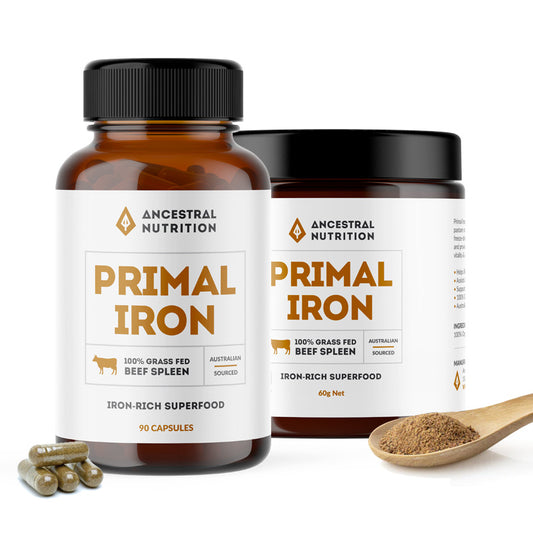
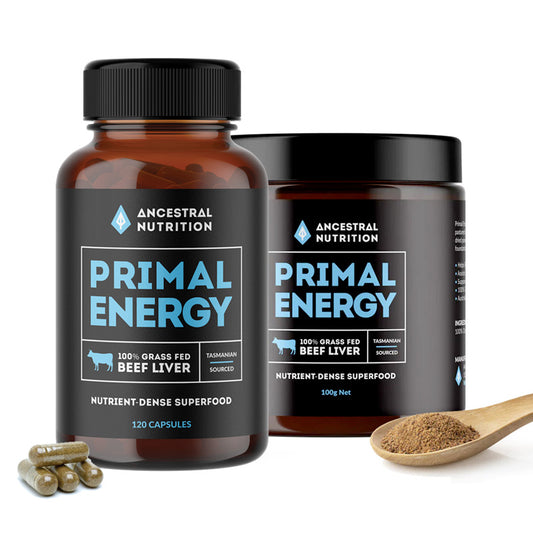
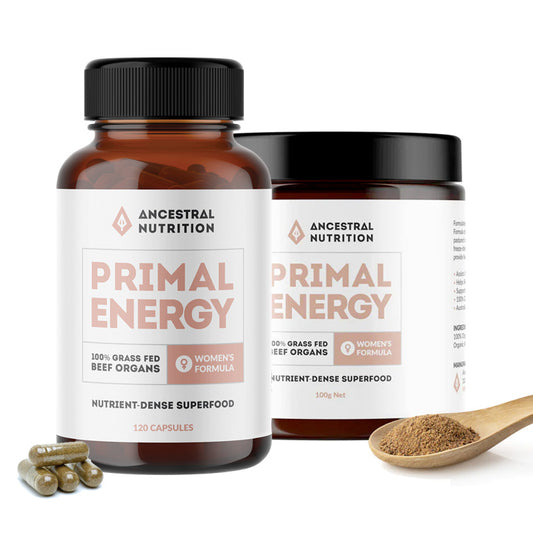
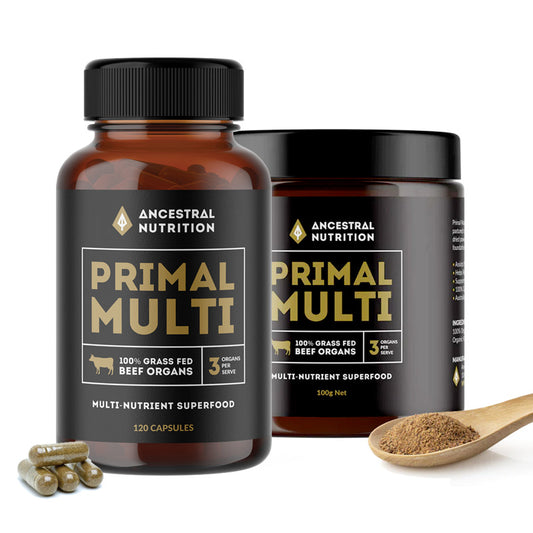
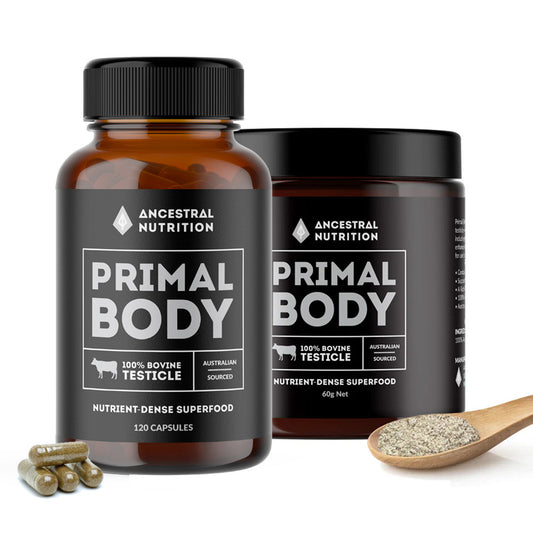
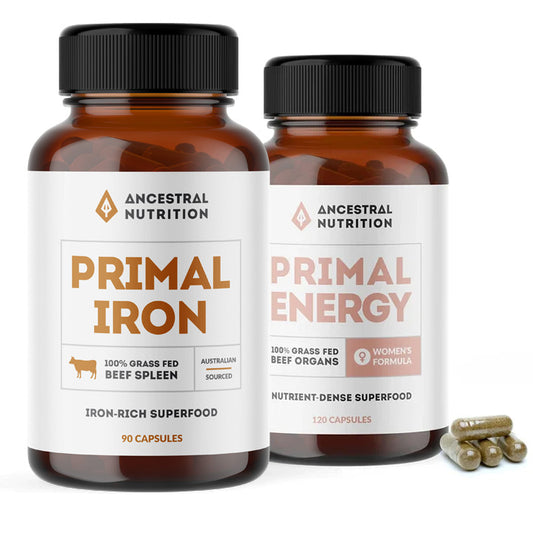
Instead of isolated synthetic compounds, we focus on freeze-dried, grass-fed organ foods, delivering naturally occurring nutrients in the forms and ratios found in nature.
No shortcuts, no synthetic fortification, just nutrient-dense whole foods the way humans have eaten for generations.
If you’re ready to move beyond “one-a-day” thinking, explore the range at Ancestral Nutrition and experience the difference that food-first nutrition can make.