The Vitamin A Myth
article by Ancestral Nutrition
Vitamin A has become one of the most misunderstood nutrients in modern nutrition. If you mention liver someone will inevitably say, “Isn’t that dangerous?” Search online for retinol and the word “toxicity” appears within minutes, but before we talk about fear, let’s talk about function.
Because vitamin A, specifically retinol, its active form, is not optional. It’s foundational.
Why Retinol Matters (At Every Stage of Life)
Vitamin A contributes to:
- Normal immune function
- Maintenance of skin and mucous membranes
- Normal vision
- Cell growth and development
In early life, adequate vitamin A intake supports normal growth and development. During adulthood, it plays a role in maintaining tissue integrity, immune defence, and cellular turnover. As we age, it continues to support normal immune function and helps maintain healthy skin and protective body linings.
Retinol isn’t just about eyesight, though it is essential for vision. It’s involved in gene expression, cellular differentiation, and the maintenance of barrier tissues like skin and the lining of the respiratory and digestive tract. This is not a fringe nutrient, it’s fundamental biology.
And unlike beta-carotene (a precursor found in plants), retinol from animal foods is already in its active form. It doesn’t require conversion.
Where the Fear Started
Vitamin A is fat-soluble, which means it can be stored in the body. Because of that, excessive chronic intake can cause toxicity, but here’s what gets lost in the conversation:
Most documented vitamin A toxicity cases involve high-dose synthetic retinol supplementation, not modest amounts of whole food derived vitamin A.
Historically, toxicity has been associated with:
- Long-term intake of large synthetic doses
- Pharmaceutical retinoid medications
- Sustained intakes far above normal dietary levels
Not from eating liver occasionally and not from consuming small food-level amounts.
Let’s Talk Numbers
A typical 2 g serving of freeze-dried beef liver provides roughly 240 micrograms (µg) of vitamin A (as retinol).
For context, the Australian RDI is:
- 700 µg per day for women
- 900 µg per day for men
So one serve provides about:
- 34% of the RDI for women
- 27% of the RDI for men
The Tolerable Upper Intake Level (UL) for adults is 3,000 µg per day from all sources. To reach that upper level from freeze-dried liver alone, you would need:
More than 12 serves per day, which equals: 48 capsules every single day.
And toxicity isn’t triggered by a few days of high intake. It is associated with chronic exposure over months or years.
There’s a vast difference between:
- 240 µg from food
- And sustained daily intakes near or above 3,000 µg
Synthetic vs Whole Food: Why It’s Not the Same
Synthetic retinol in multivitamins is often delivered in isolated, concentrated doses, sometimes 1,000–3,000 µg per tablet. That makes it easy to unintentionally approach the upper intake level, especially when combined with fortified foods.
Freeze-dried liver is different as it delivers retinol within a whole-food matrix alongside copper, zinc, B vitamins, protein and other naturally occurring cofactors. These nutrients support the body’s normal vitamin A transport and metabolism pathways.
There’s a difference between:
- Taking a high-potency isolated synthetic vitamin
- And consuming a small, concentrated portion of nutrient-dense food
The toxicity myth often ignores that distinction.
The Real Risk Is Context-Free Advice
The internet tends to flatten nuance with phrases like “Vitamin A is dangerous.” But vitamin A deficiency carries risks too. Inadequate intake affects immune function, skin integrity, and vision.
The real conversation isn’t “Is vitamin A safe?”, it’s:
- What form?
- What dose?
- For how long?
- In what context?
When you look at the numbers, a 2 g serving providing 240 µg sits comfortably within normal dietary contribution ranges. It’s not an extreme intervention, it’s not megadosing and it’s not pushing upper limits... It’s simply real food.
A Return to Perspective
For most of human history, vitamin A came from animal foods, especially organ meats. Small amounts eaten regularly. Modern fear often arises from isolated nutrients taken out of context. When we return to scale, balance, and form, the story changes.
Vitamin A isn’t the villain, but misunderstanding dosage is.
A Simple Way to Include Retinol
If you’re not preparing liver at home, freeze-dried liver offers a practical alternative.
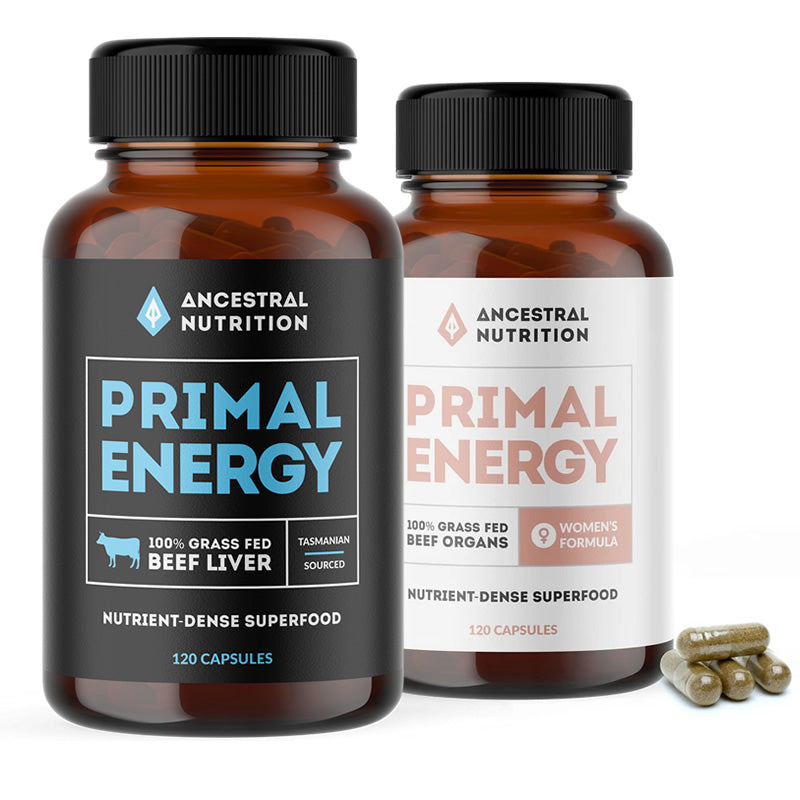
Our freeze-dried, grass-fed beef liver capsules or powder provide vitamin A in its naturally occurring form, delivering approximately 240 µg per 2 g serve.
- No synthetic retinol.
- No megadosed isolates.
- Just whole-food nutrients, preserved through freeze-drying.
If you’ve avoided vitamin A because of headlines, it may be time to look at the numbers. Explore our freeze-dried beef liver and return to food-level nutrition, with context, not fear.